Selling a waterfront home in Barnstable’s villages is not like a typical sale. Permits, docks, flood insurance, and shoreline rules can shape your price, your buyer pool, and your timeline. If you plan ahead, you can protect your legacy and maximize your net. In this guide, you’ll learn how to price for your shoreline type, gather the right documents, time your listing, and market the water as well as the home. Let’s dive in.
Know your village market
Cape Cod is seasonal and nuanced. Recent data shows the region slowed in 2025, with luxury segments still transacting. That means you should expect a mixed market that rewards precision. Banker & Tradesman’s 2025 overview highlights softer mid‑market activity alongside continued high‑end sales.
Different Barnstable villages can behave very differently. Osterville and Cotuit often command higher medians than the county as a whole, while other villages move on different timelines. For pricing, use village‑level comps and match shoreline exposure as closely as possible.
Price by shoreline type
Waterfront premiums are real but not uniform. Research shows that value depends on access, view quality, water depth, water quality, and scarcity. Academic studies report a wide range of premiums for direct ocean views compared to indirect views or limited access, which is why you should avoid any one‑size‑fits‑all percentage. See the literature summary in this peer‑reviewed coastal valuation analysis.
Align your comps with three shoreline categories:
- A: Direct frontage with private beach or deeded tidal frontage.
- B: Direct waterfront with dockage or deep‑water access.
- C: Near‑water or water‑view with limited or no direct access.
Quantify dock condition, seawall/bulkhead status, riparian rights, flood zone, and septic compliance in your CMA. These details influence both value and buyer confidence.
Gather permits and proofs before you list
A Barnstable waterfront attracts sophisticated buyers who will verify shoreline rights and approvals. Getting ahead of this work prevents delays and renegotiations.
Waterfront licensing and shoreline approvals
- Chapter 91 governs structures and uses on tidelands and waterways. Confirm whether your dock, float, or seawall was licensed and recorded. Learn the basics in the state’s guide to Chapter 91 Waterways.
- Local Conservation Commission approvals apply to most shoreline work. Check the municipal file for prior Notices of Intent, Orders of Conditions, or any enforcement. Start here: Barnstable Conservation Division.
- Town Harbormaster records help verify moorings, dock rules, and local harbor regulations. Review your file with the Barnstable Harbormaster.
If you have seasonal docks or floats, be aware that local code and permits may limit in‑water dates and require seasonal removal. The right paperwork reassures buyers that your waterfront amenities are compliant.
Document checklist to assemble now
- Deed and any current survey, noting mean high/low water if available.
- Recorded Chapter 91 licenses, Conservation Orders of Conditions, and any final certificates of compliance.
- Harbormaster records for moorings or berths.
- Title V septic inspection report or scheduled inspection date. See state rules for transfers: Massachusetts Title 5 guidance.
- Lead paint disclosures if the home was built before 1978. Review requirements: Lead paint in residential sales.
- Current homeowners and flood insurance declarations plus claims history.
- Any elevation certificate and flood documents. FEMA explains ECs here: Elevation Certificates overview.
- Recent engineer assessments for dock, seawall, or bulkhead if condition is unclear.
Septic, lead, and mandatory disclosures
Two items often control timing. Title V septic inspections are tied to property transfers and are generally required within two years of the sale date, with limited exceptions. Schedule early in case repairs are needed. See the state’s transfer rules: Title 5 septic requirements.
If your home was built before 1978, federal and state lead law requires you to provide the proper disclosures and pamphlet before a buyer is obligated under contract. Noncompliance risks legal penalties. Details: Lead paint disclosure requirements.
Flood risk and insurance buyers will ask about
Flood insurance has changed. Under FEMA’s Risk Rating 2.0, pricing is more property specific and considers distance to water, elevation, and replacement cost. Many buyers request early quotes and will ask for any available elevation data or a prior NFIP policy. A clear overview is available here: NFIP and Risk Rating 2.0 basics.
If you do not have an elevation certificate, a buyer or lender may ask for one. Start with FEMA’s summary of who can prepare ECs and why they matter: Elevation Certificates.
Barnstable has pursued participation in FEMA’s Community Rating System, which can influence discounts for flood insurance once a class is assigned. The Town provides updates here: Community Rating System project page.
Sea‑level rise and erosion are also part of buyer due diligence. The Cape Cod Commission maintains mapping tools for shoreline change and sea‑level rise. If your shoreline has visible retreat or aging protection, consider a recent engineer memo so you can set expectations in the listing.
Prepare the property for the waterfront buyer
Shoreline structures and inspections
Buyers and insurers scrutinize docks, pilings, and coastal protection. If your seawall or dock is older or clearly weathered, get an engineer’s assessment and a written budget for maintenance or repair. Industry guides show wide cost ranges depending on materials and site conditions. Having a professional estimate gives you leverage to price accurately or offer a targeted credit instead of making big concessions later.
Photography, drone, and showings
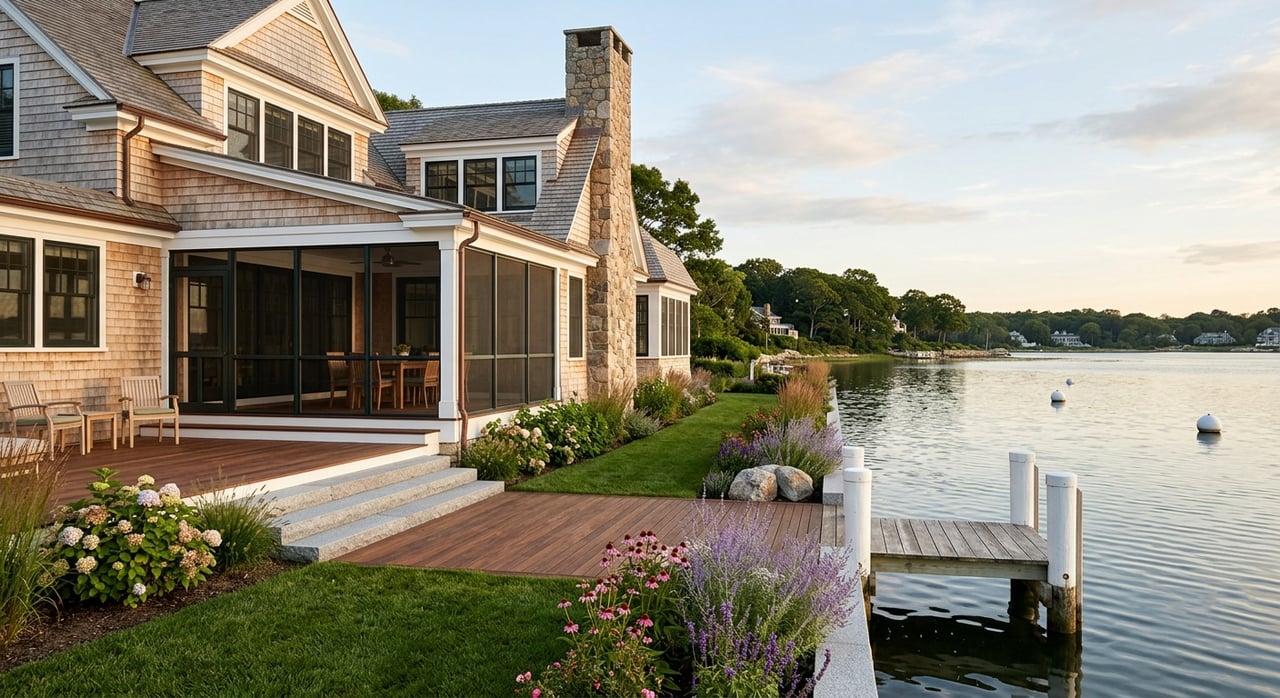
Great waterfront marketing shows the resource at its best. Time exterior photos and key showings to favorable tides and light. High tide often flatters boating access and sparkle on the water; low tide can reveal beach conditions and channel edges.
Aerials are powerful for illustrating approach channels and context. If you use drone imagery, hire a Part 107‑certified pilot and confirm local restrictions. The National Association of Realtors summarizes best practices here: Drones and real estate field guide. In Barnstable, launching or operating drones from certain Town properties can be restricted without written permission, so plan ahead when choosing takeoff sites.
Listing copy that builds trust
Emphasize provable details and avoid overpromising. Good examples include:
- Documented deep‑water access and channel notes.
- Dock dimensions, float configuration, and lift or mooring details.
- Verified deeded access or private beach rights.
- Recent seawall engineering or maintenance with summary notes.
Avoid making claims about future shoreline stability or saying that unpermitted work will be “easily approved.” Those statements can create liability and spook lenders.
Open house logistics
Waterfront buyers appreciate concise facts. Prepare a one‑page sheet with:
- Title V inspection results and date.
- Summary of Chapter 91 and Conservation approvals with record references.
- Flood policy details and any elevation certificate.
- Mooring or berth agreements with Harbormaster contact information.
- Recent engineer notes on dock or coastal structures.
Timing your sale: a 6–18 month plan
Seasonality on the Cape
Peak buyer traffic runs from spring through early fall. Aim to list when second‑home buyers are here and the water looks its best, but only after your documents, inspections, and any repairs are complete. Given 2025’s mixed market, careful timing and preparation can make a noticeable difference. See the regional context in Banker & Tradesman’s market update.
Step‑by‑step timeline
- Months 0–2: Gather core documents. Pull deed and any survey, request Harbormaster records, assemble or schedule Title V, collect lead materials if applicable, and locate insurance declarations. If shoreline condition is unclear, book an engineer.
- Months 2–4: Tackle minor repairs and staging. If significant dock or seawall work may be needed, start pre‑application conversations with the Harbormaster, Conservation, and MassDEP Chapter 91 staff to understand feasibility and timing.
- Months 4–8: If permits are required, complete filings and track review periods. Decide whether to complete work or price with a credit. Schedule professional photography and aerials around favorable tides and golden‑hour light.
- Months 8–18: Launch during your target seasonal window. Keep your documentation in a clean digital packet so buyers and lenders can move quickly through contingencies.
Negotiation playbook for waterfront sales
Expect buyers to focus on a few leverage points. Prepare for them early:
- Septic: A failed or conditional Title V can trigger big credits or delays. Have estimates ready or complete fixes before listing when feasible.
- Shoreline structures: Visible wear or missing permits for docks, floats, or seawalls signal risk. Provide engineer notes and permit history to reduce uncertainty.
- Flood insurance: Surprising premiums can reduce buying power. Offer prior policy info and, if available, an elevation certificate to help buyers obtain accurate quotes.
- Rights and access: Be ready to explain riparian rights, deeded access, or mooring constraints with supporting documents.
The more you anticipate these questions, the smoother your path to a high‑confidence closing.
Ready to talk strategy?
If you are considering a sale in Osterville, Cotuit, Hyannis, Centerville, Marstons Mills, or West Barnstable, a thoughtful plan can protect your time and your legacy. For confidential advice, village‑level pricing, and a tailored 6–18 month roadmap, connect with Cliff Carroll.
FAQs
What permits are needed to sell a Barnstable waterfront home with a dock?
- Most buyers will ask for proof of a Chapter 91 license for any structures in or over the water, plus local Conservation approvals and Harbormaster records; start with Chapter 91 Waterways, the Barnstable Conservation Division, and the Barnstable Harbormaster.
How do flood insurance changes affect my Barnstable sale?
- FEMA’s Risk Rating 2.0 sets more property‑specific premiums, so buyers will want current quotes and may ask for an elevation certificate; see NFIP basics and FEMA’s Elevation Certificates, and note the Town’s Community Rating System project for potential discounts.
Do I need a Title V inspection before listing a Cape Cod waterfront home?
- A Title V septic inspection is generally required within two years of a property transfer, with limited exceptions; schedule early to avoid surprises and review the state’s Title 5 guidance.
How should I price a water‑view home vs direct waterfront in Osterville or Cotuit?
- Use hyperlocal comps and match shoreline type: A) direct frontage with beach or tidal rights, B) direct waterfront with dock/deep water, or C) near‑water or view only; academic research shows premiums vary widely by access, depth, and view quality, as summarized in this valuation analysis.
What should my marketing include for a Barnstable harbor property?
- Time photos for favorable tides and light, use a Part 107‑certified pilot for aerials per the NAR drone guide, and highlight measurable facts like dock specs, depth at mean low water, and mooring details verified with the Harbormaster.